MIT makes progress on campus climate goalsIn 2021, MIT set campus decarbonization goals as part of its Fast Forward climate action plan. Five years later, many of those goals have been met or are on track for completion, including efforts to make the Institute’s buildings more …
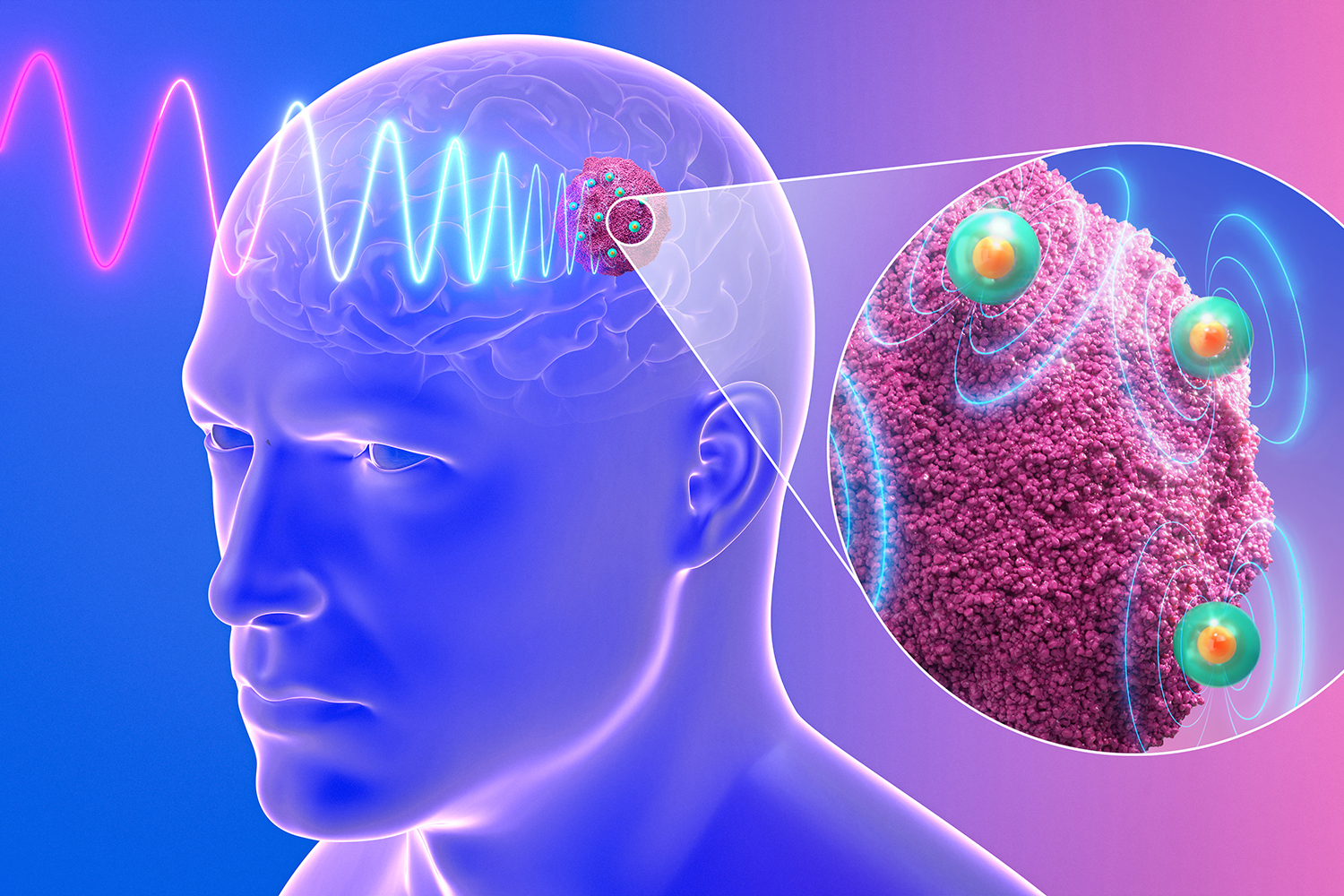
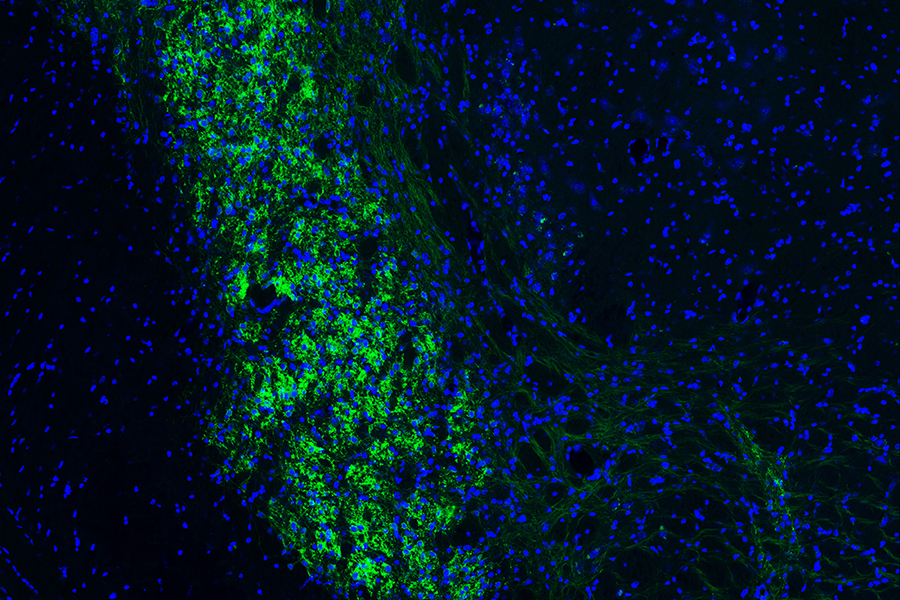
Injectable nanodevices could provide effective treatment for drug-resistant glioblastomaThe brain cancer glioblastoma is one of the most aggressive and treatment-resistant cancers known to medicine, carrying a median survival of just 12-15 months, even with the best available care. Now, researchers at the MIT Media Lab have developed injectable nanoantennas, …
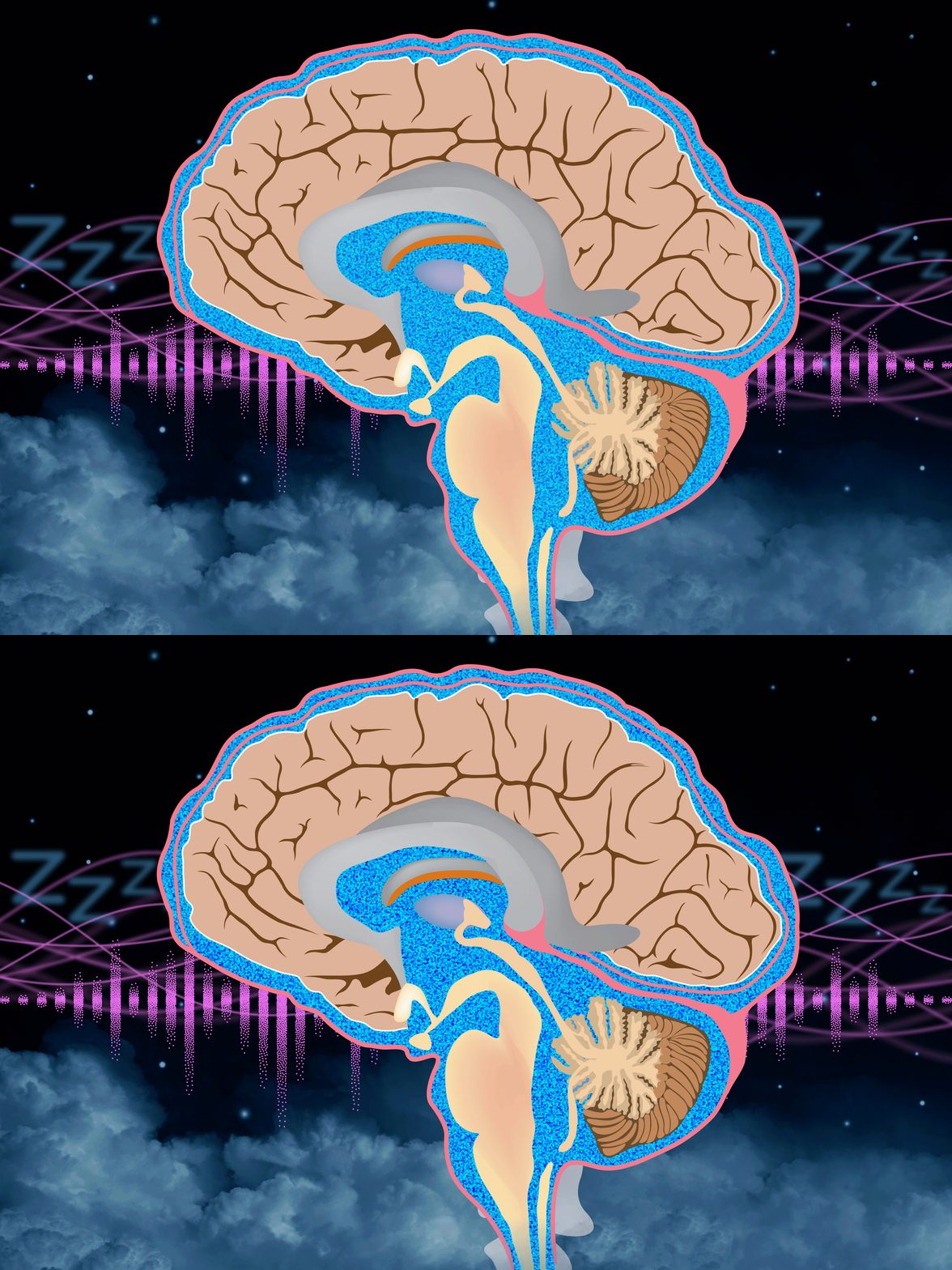
A burst of “pink noise” may lead to more restorative sleepDuring the day, waste products such as lactic acid and worn-out proteins build up in the brain. When we sleep at night, waves of cerebrospinal fluid (CSF) help to wash away this waste, keeping the brain healthy.In a new study, …
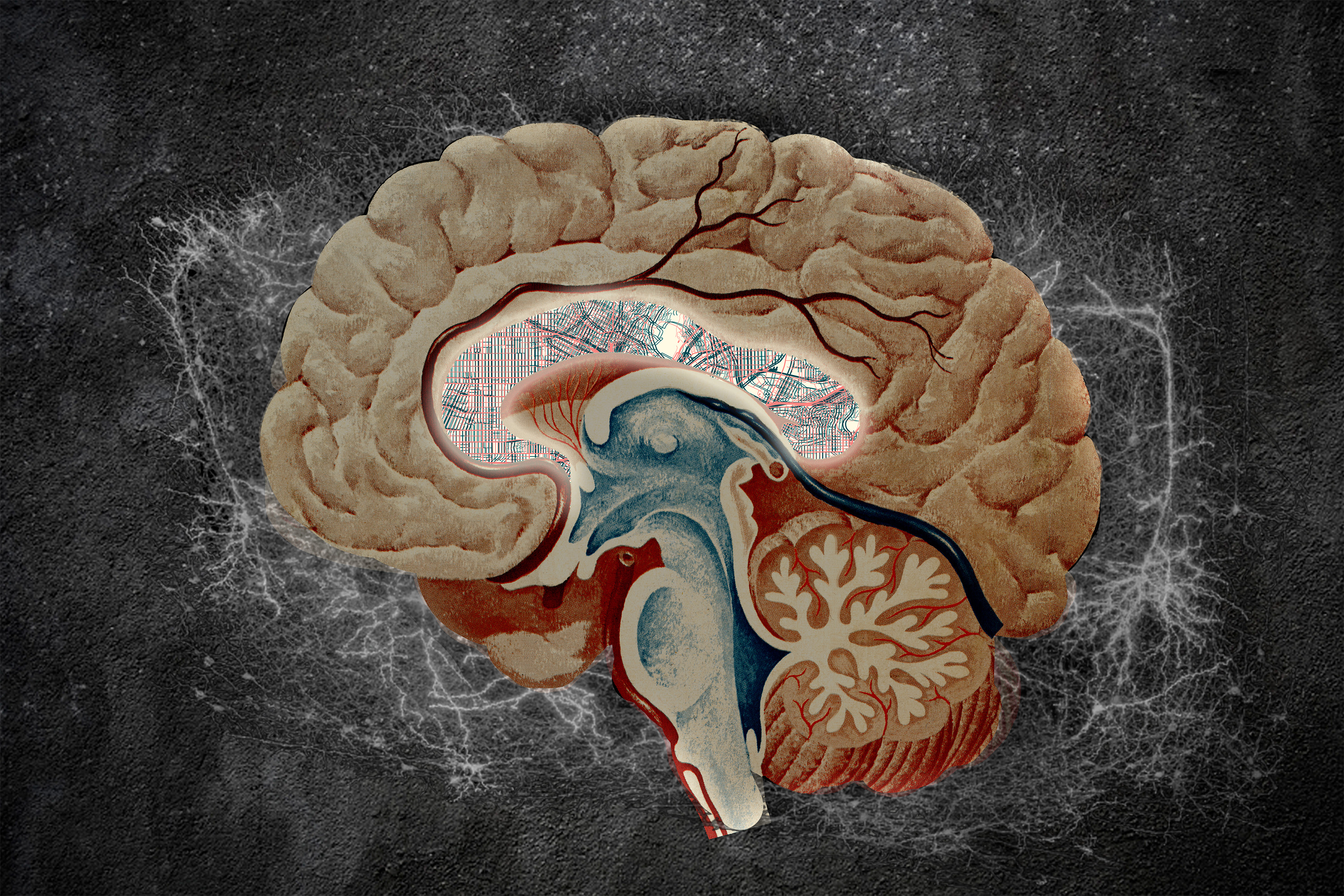
Cognition and consciousness arise from analog computations, says new theoryA new theory, published in The Journal of Neuroscience by three scientists in The Picower Institute for Learning and Memory at MIT, offers an explanation of how the brain produces cognition and consciousness: It uses traveling waves of rhythmic neural …
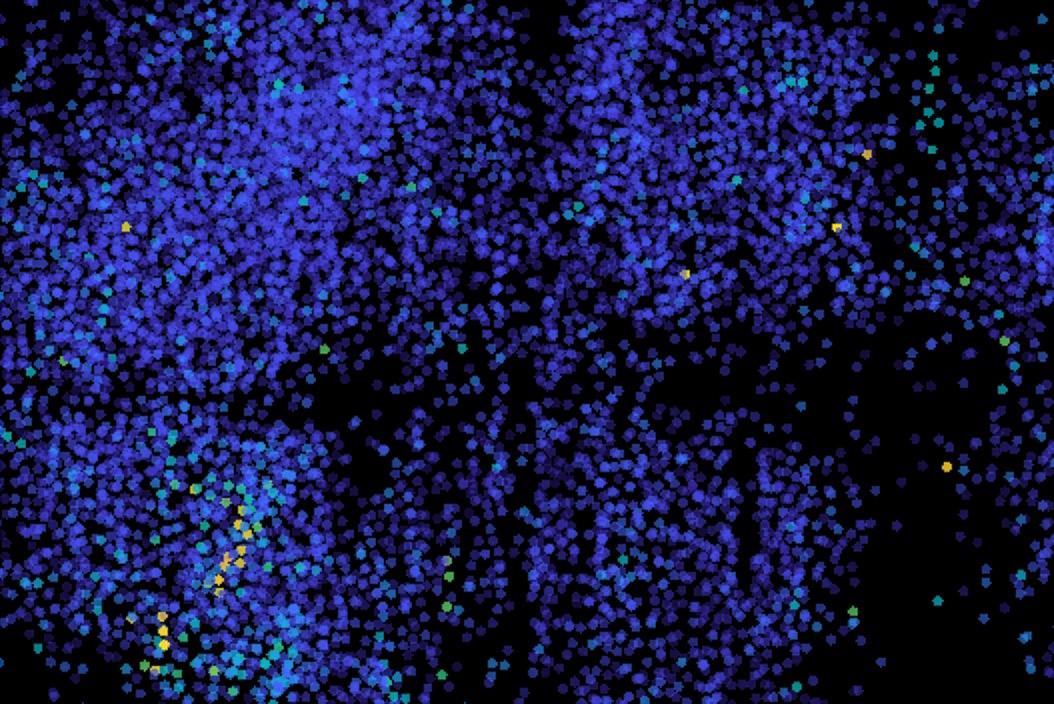
Atlas of the brain’s striatum could guide researchers to new drug treatmentsA region of the brain called the striatum is critical for many cognitive and motor functions, including decision-making, control of movement, habit formation, and processing of reward. It also plays a role in addiction and is significantly affected by Huntington’s …
Tackling rare genetic disorders with patient-focused scienceShannon Knight attributes her interest in neuroscience to an experience she had in high school. She and her sister attended a medical day for students at the nearby University of Illinois Chicago. As they were on their way out of …
DNA shaper steers nervous system developmentA functional nervous system depends on the cooperation of many kinds of cells. So as developing organisms build their nervous systems, their neurons must take on different forms and functions to fulfill their designated roles. That carefully orchestrated process gives …
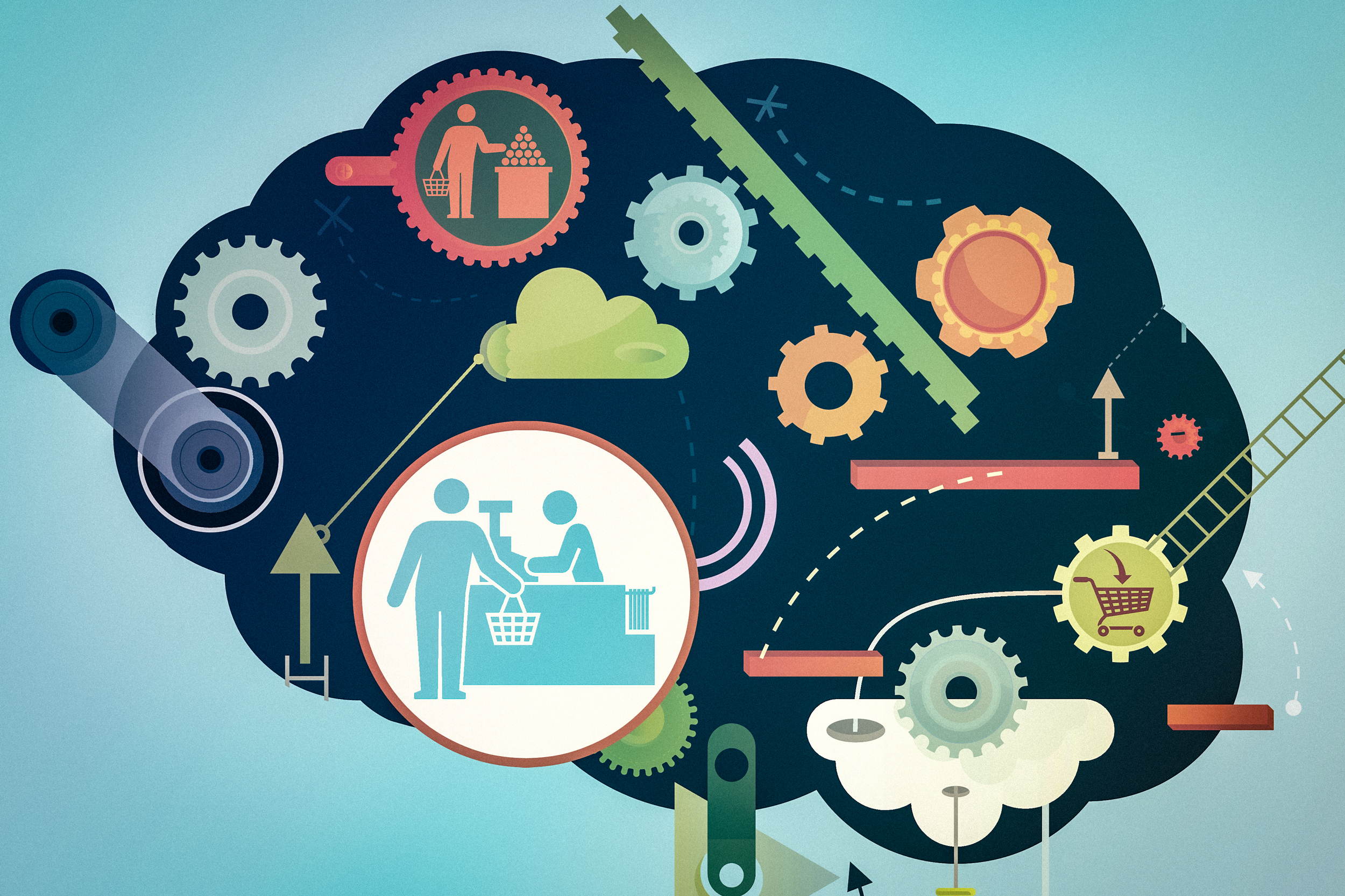
Flexible brain circuits can switch between different tasksAs we move through everyday life, our brains engage in a huge variety of cognitive tasks. For example, during a grocery run, we might have to recall the items for a recipe, remember where the clerk said the flour was located, …
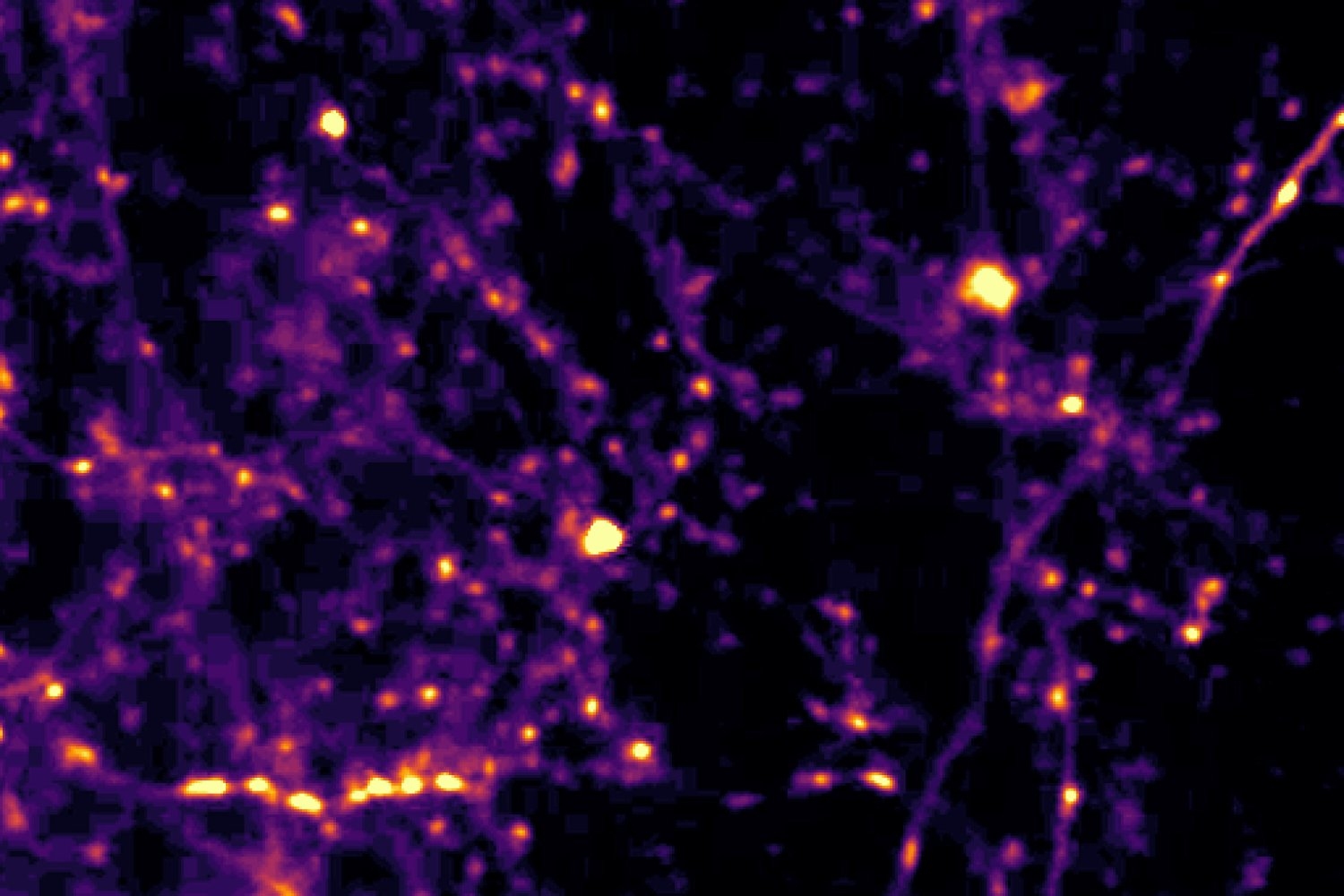
High-speed microscopy reveals electrical activity across the brainWithin the brain, neurons compute by generating electrical impulses. These signals travel throughout neurons, which are in turn connected in vast networks that control brain functions such as sensory perception, memory formation, and control of movement. In an advance that could help neuroscientists …
Alexander Rakhlin named director of the MIT Statistics and Data Science CenterAlexander “Sasha” Rakhlin PhD ’06, the Distinguished Professor in Data, Systems, and Society at the MIT Institute for Data, Systems, and Society (IDSS); a professor of brain and cognitive sciences at MIT; and a principal investigator in the MIT Laboratory …
Emery Brown, Daniel Hastings, and Douglas Lauffenburger named Institute ProfessorsA physician and neuroscientist who studies how anesthesia affects the brain; a leader in aerospace engineering, policy, and education; and the founding head of MIT’s Department of Biological Engineering have been awarded MIT’s highest faculty honor: the title of Institute …
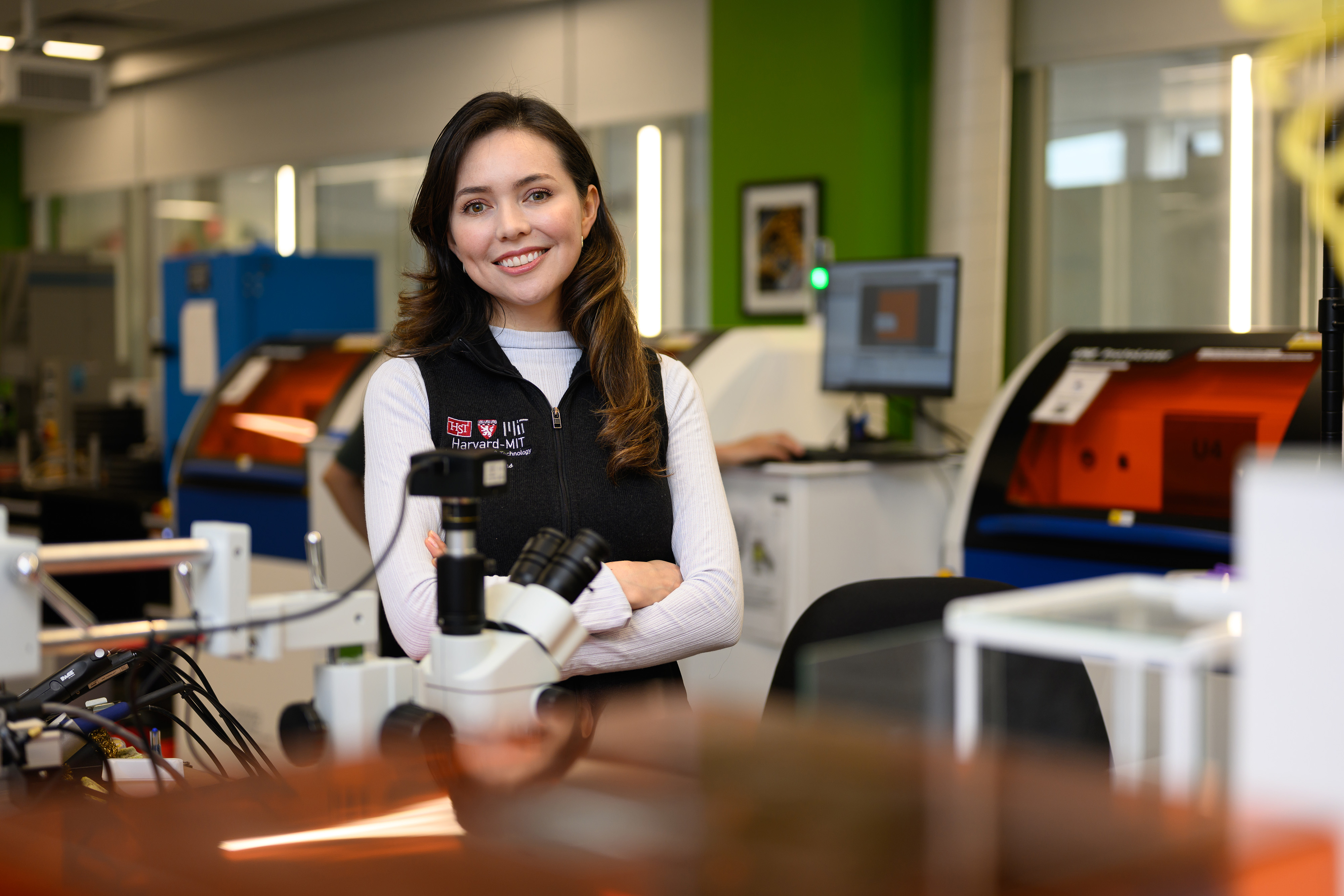
Diana Grass: Listening to the body’s languageGrowing up in Colombia, Diana Grass had a simple response whenever someone told her something was impossible.“I’ll figure it out.”It’s a phrase that she still lives by today as PhD candidate in the Harvard-MIT Program in Health Sciences and Technology …
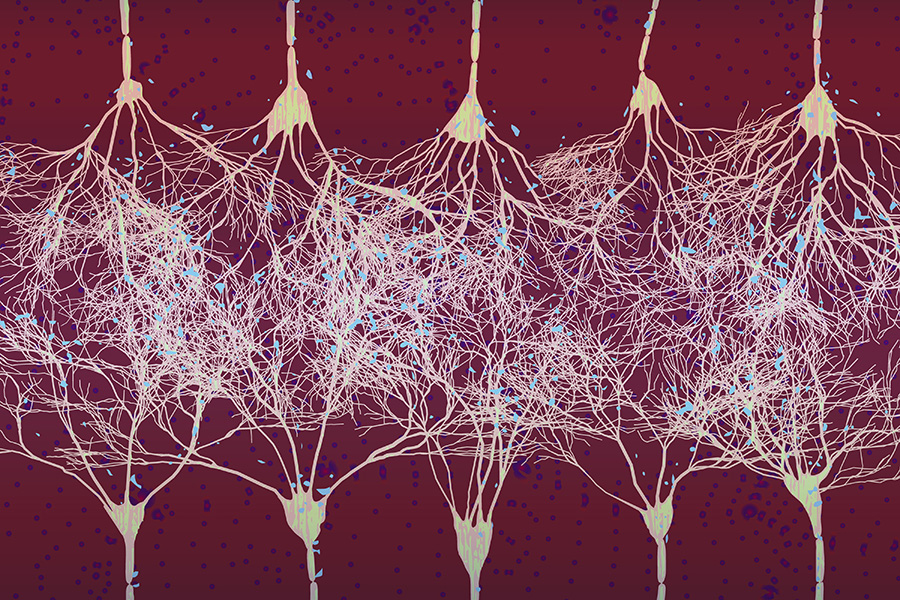
Electric fields help guide neural activity, even from moment to momentIt’s a fact of life that the electrical activity of neurons will vary during repetitions of the same task, even when the ultimate outcome is the same. A new study shows that a lot of ongoing fluctuations in the brain’s …
How visual learning happens in the brainThe wiring and rewiring of the brain never ends. Neural pathways are constantly being reshaped as we interact with the world and learn new things. At MIT’s McGovern Institute for Brain Research and York University in Toronto, Ontario, scientists are …
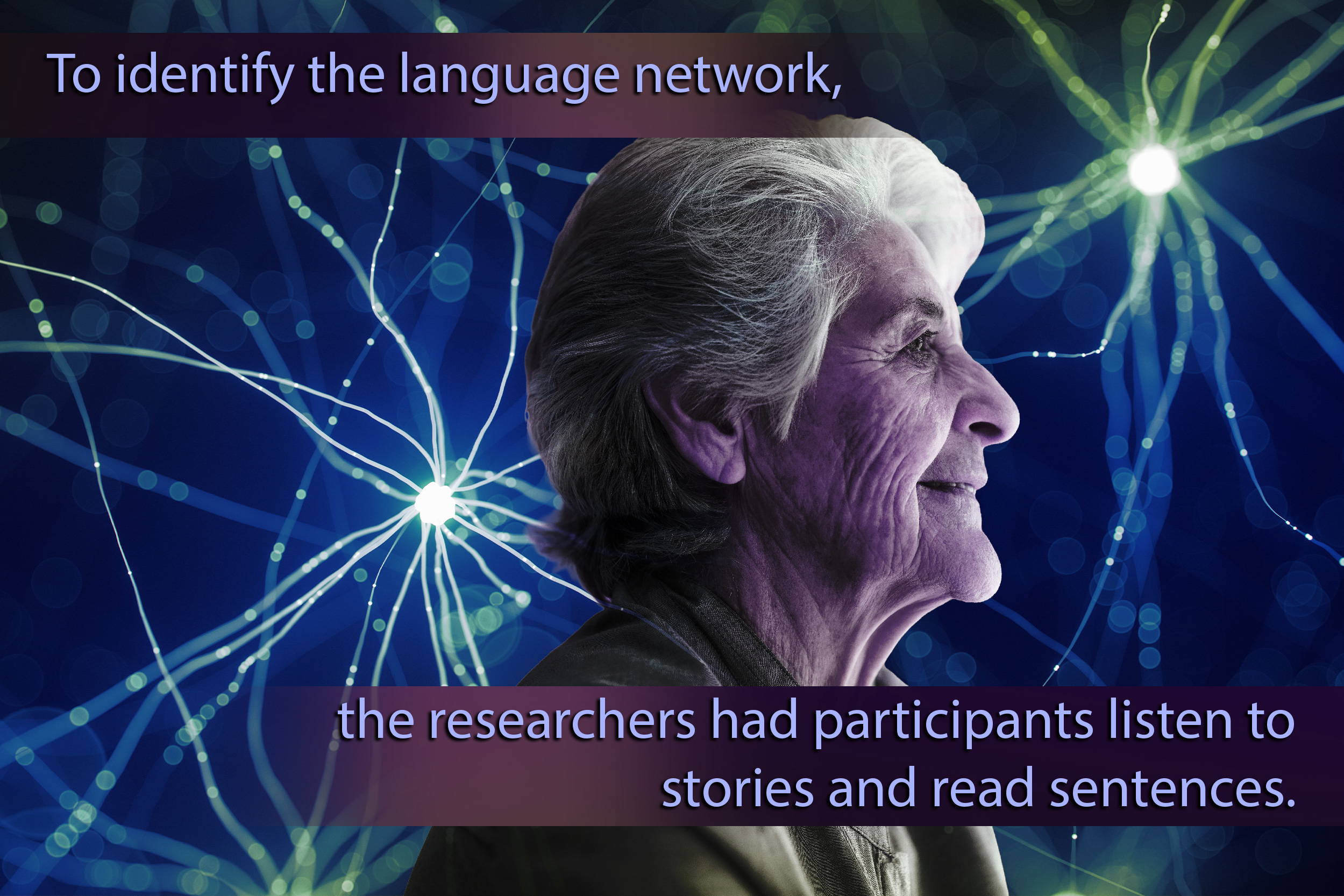
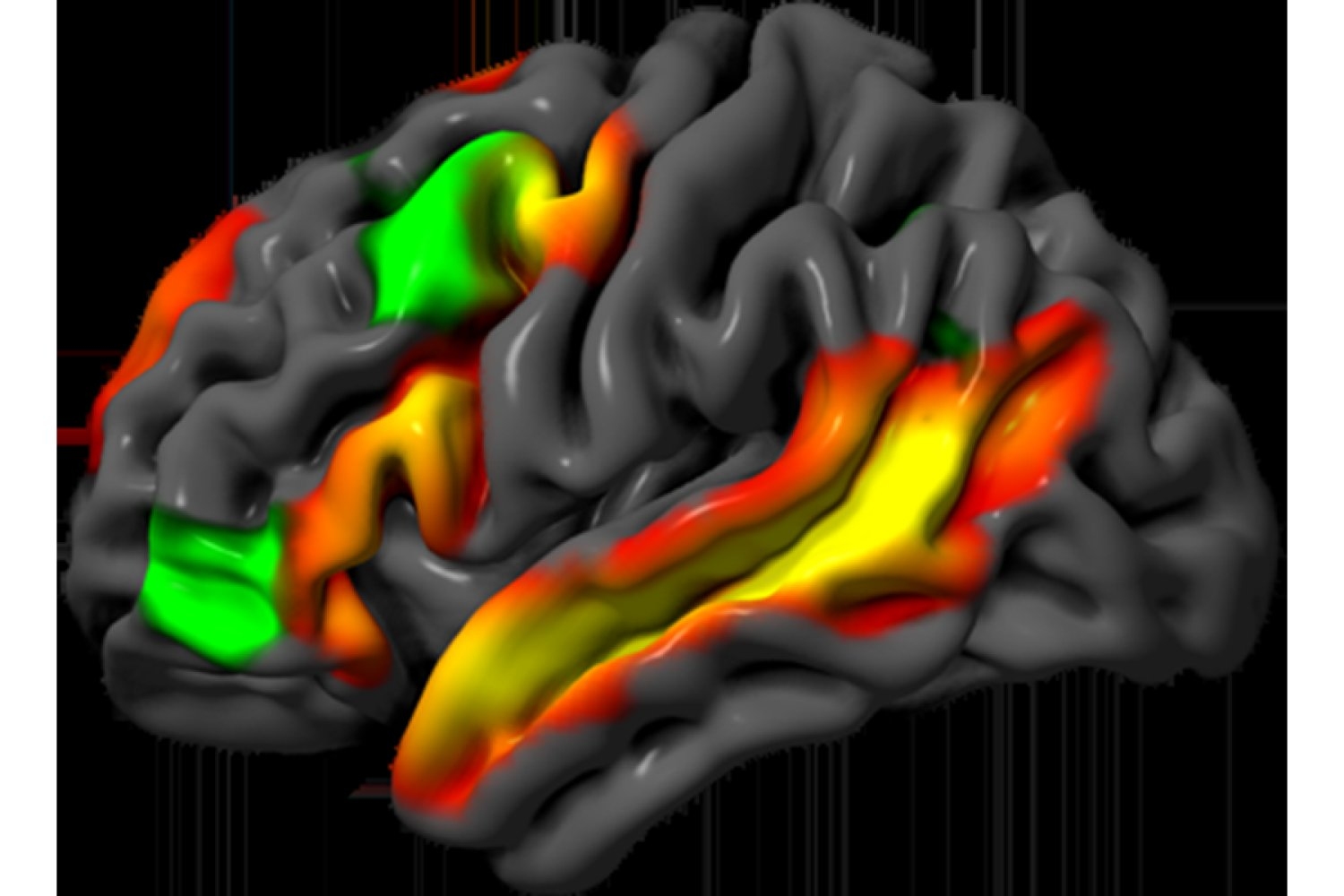
Separating logic and languageSome people find it useful to talk through their problems — but language isn’t necessary for logical reasoning, cognitive neuroscientists at MIT’s McGovern Institute for Brain Research say. In research published this week in the journal PNAS, researchers led by MIT …
The brain’s internal rulerIf you are crossing an unfamiliar room in the dark, you may grope around a bit to get a sense of your space.But for many animals, feeling out a space comes more naturally. A mouse, for instance, can efficiently navigate …
Toward a future that preserves benefits of neurotechnology for allAs advanced medical technology gets closer to hitting consumer markets, the need for guardrails on protected usage should increase. What might begin as a neural implant to aid in communication could become a device used to police one’s innermost thoughts.Intrigued …
Load More
We use cookies to ensure that we give you the best experience on our website. If you continue to use this site we will assume that you are happy with it.
You can revoke your consent any time using the Revoke consent button.